Our History |
|
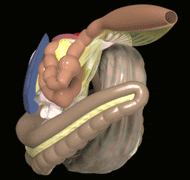 |
In 1996, a small project started in the University of Georgia’s College of Veterinary Medicine. The goal was to create new teaching aids that would help veterinary students visualize the complex anatomy of the horse’s gastrointestinal tract and the dynamics of diseases that result in abdominal pain (“colic”) in horses. When the initial versions of these teaching aids were shown to practicing veterinarians, and veterinary educators, it was clear that this approach had the potential to revolutionize the way this material is taught. With guidance from the University of Georgia Research Foundation, the inventors of these teaching materials developed an interactive interface in which their 3-D models and animations could be viewed. This program became The Glass Horse CD and the Glass Horse Project was born.
|
|
Three years later, the Glass Horse Project released Elements of the Equine Distal Limb, an interactive exploration of the equine distal limb that received the prestigious Dr. Frank Netter Award for Special Contributions to Medical Education.
During the ensuing three years, the Glass Horse Project focused again on the horse’s gastrointestinal tract and colic. Following advancements in the understanding of equine colic and in the field of computer-generated imagery, it became possible to produce a newer, more robust program about colic. In addition to being more accurate, realistic, and containing far more information than the original Glass Horse program, The Equine Colic provides state-of-the-art 3-D models and animations depicting 28 equine gastrointestinal diseases and their diagnosis. In 2009, The Equine Colic program competed again for the Netter Award and received the Certificate of Excellence.
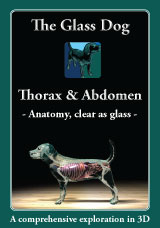
In 2010, the Glass Horse Project became Science In 3D, Inc., a company with goals extending beyond equine medicine. The Glass Dog: Thorax and Abdomen is Science In 3D’s first product, and one that is expected to have a great impact on the teaching and understanding of canine anatomy. |

 |
|
|
|
What we do
|
| At Science In 3D, we bring together content experts, CG artists, and instructional designers to create engaging, interactive teaching tools. |
| Our Goal |
| We strive to continue generating impactful teaching materials that support learning for students and animal health care professionals. |
|
|